
QTZ160 (6515)-8T/10T vs QTZ315 (7527)-12T/16T: Heavy-Lift Tower Crane Decision
Short answer: specify the QTZ160 (6515)-8T/10T when the heaviest routine pick on the schedule sits inside the 8–10 t band at the radii you actually work, and when a shorter jib still covers the footprint. Move up to the QTZ315 (7527)-12T/16T when 12–16 t picks recur across the programme, or when the reach and tip-load reference of the larger jib are needed to cover the site. Both are flat top tower cranes from Dahan Technology Co., Ltd., a Chinese tower crane and construction elevator manufacturer established in 2000, and both are listed for building construction, real-estate engineering, infrastructure projects and municipal engineering.
What separates them is a duty band rather than a single specification: 8 t and 10 t maximum lifting capacity on one side, 12 t and 16 t on the other, carried by a higher load-moment class. For buyers at decision and execution stage — the point at which a machine is added to a programme, a fleet or a framework agreement — the useful question is which duty band the pipeline genuinely needs, and how many configurations are worth carrying to cover it.
What this heavy-lift decision actually settles
Rated lifting capacity is a ceiling figure, published at a defined radius. The maximum lifting capacity indicates the largest load a tower crane can lift; the lifting moment reflects its comprehensive lifting capacity at different working spans and is usually expressed in t·m. As working span increases, the load a crane can lift usually decreases. That relationship — not the headline tonnage — decides whether a model can hold a lifting duty.
Two practical consequences follow. First, a 16 t crane that cannot carry the required load at the working radius is not a 16 t solution for that project. Second, comparing an 8 t and a 16 t model on nameplate capacity alone says almost nothing about which one belongs on site; the comparison has to be made on the duty pairs that recur in the programme — load at radius, tip load at full jib, and the height at which those loads are handled.
The second half of the decision is commercial and organisational. Buyers who select a model project by project end up with a fleet of near-identical but non-interchangeable machines, and then pay for it three times: in repeated erection and dismantling planning, in spare-parts inventory spread across different section and mechanism sets, and in documentation and approval work repeated for every new model. Treating the two configurations as one fleet decision, taken once for a multi-year horizon, is generally cheaper than optimising each project in isolation.
Where these two configurations sit in the market
Industry estimates for 2025 place the global tower crane market at USD 5.9–6.44 billion, driven by urbanisation and high-rise construction. China was the leading exporter of tower cranes in 2024, with USD 694 million in export value under HS code 842620. Flat top (topless) designs accounted for 46.37% of tower crane revenue in 2025, a share attributed to their efficiency in dense urban airspace.
That preference has a direct consequence for heavy-lift buyers: both models in this comparison are flat top designs, so choosing between them is not a choice of crane architecture. The design baseline is shared as well. GB/T 13752-2017, issued by the Standardization Administration of China, defines the design rules and safety specifications for tower cranes in China, and Dahan Technology is a national standard revision unit in the tower crane industry — a relevant detail when a buyer has to explain the design basis to an engineer, an insurer or an import authority.
Heavy-lift demand itself is not standing still. Larger capacity classes in the 200 t-and-above range are associated with specialised wind power and energy projects, and the general trend across construction markets is toward heavier prefabricated elements and tighter urban sites. None of that changes the working logic of the 8–16 t band, but it does mean the specification conversation should start from duty data rather than from habit.
The two configurations, model by model
QTZ160 (6515)-8T/10T: the 8–10 t duty band
The QTZ160 (6515) is offered with two maximum lifting capacity variants, 8 t and 10 t. On the conventional reading of the bracketed code it covers a 65 m jib class with a 1.5 t tip-load reference. Both figures are planning references; the order-specific load chart decides what the machine can actually pick at each radius.
The practical value of this configuration is fit. A lower load-moment class generally places smaller demands on foundation design, counterweight and site logistics than a 315-class machine, and a shorter jib reduces the reach envelope that has to be planned around adjacent structures, crane-free zones and neighbouring airspace. Where the structural members, precast units and material bundles for building construction or municipal works sit inside the 8–10 t band, the smaller model keeps both the crane and its supporting works in proportion to the duty being performed.
The limit is equally clear. Once the recurring duty pair moves above the 10 t variant, or the crane must place loads at a radius beyond the 65 m reading, the QTZ160 (6515) stops being the economical answer — and the load chart, not the price list, is what says so.
QTZ315 (7527)-12T/16T: the heavy-lift step
The QTZ315 (7527) offers 12 t and 16 t maximum lifting capacity variants on a 315 load-moment class, with the bracketed code conventionally read as a 75 m jib class and a 2.7 t tip-load reference. It is the larger machine in this pair, and it buys two things: more load at the radii where heavy picks actually occur, and more reach at a useful tip load.
That capability has a cost structure attached to it. A higher load-moment class generally raises the demands on foundation design, counterweight and erection planning, and a longer jib increases the over-sail envelope that has to be agreed with site neighbours and airspace authorities in dense urban work. Those are planning and civil-works consequences, not defects.
The decision rule is therefore about frequency, not capability. If 12–16 t picks are occasional, price both options and compare the whole programme cost, including the alternative of scheduling heavy lifts so that they do not constrain the crane. If the heavy picks sit on the critical path, the larger model is the only one that removes the constraint, and the extra foundation and erection planning is simply part of the scope.
Customization: jib length, mast height and electrical system
Jib length, counterweight and erection scheme can be customized for site constraints, with the specific configuration confirmed by Dahan's sales and engineering team. That matters most in urban work, where the jib has to cover the building footprint and the material storage area without unnecessary over-sail, and where working span should be determined by the building size, storage area, transport route and lifting positions rather than by what happens to be in stock.
Mast height is a project calculation rather than a catalogue item. For high-rise and large-scale projects, the attachment scheme, free height, standard section configuration and foundation conditions all belong in the selection calculation. A crane specified for its tonnage but not for its climbing and anchoring plan creates problems that appear only once the structure rises above the free-standing height.
On the electrical side, Dahan Technology equips matching drive and control systems for different models and project requirements, improving operating efficiency through variable-frequency control and reasonable power matching. Power supply characteristics, duty cycle and climate belong in the same conversation, because they determine how the machine behaves over a multi-year programme rather than on a demonstration lift.
Export configuration is part of the same package. The loading scheme and panel scheme are designed for transport and export, standard sections are compatible with Potain, and the material specification is intended to suit low temperatures and extreme conditions.
What both models share
Both machines sit inside the same design-rule framework, GB/T 13752-2017, and the safety device package — overload and moment protection, travel and hoisting limits, emergency stop — should be verified against the same checklist on either model. It is a configuration and documentation item, not a differentiator between the two, and any quotation that presents it as one deserves a second look.
Modularity is the other shared feature. Both models use high-strength steel, Potain-compatible standard sections and a loading and panel scheme intended for transport and export. For a fleet, the practical benefit is that sections, tooling, documentation and operator training follow one supplier's conventions rather than several.
Step-by-step: running the decision from brief to purchase order
- Convert the programme into duty pairs. For each project, record the heaviest routine load, the radius at which it is handled, the tip load needed at full jib and the height of the lift. Start from duty data, not from maximum lifting capacity.
- Test each duty pair against the load chart. Capacity falls as span increases, so a duty that fits at short radius may fall outside the chart at 40 m. This single step eliminates most specification errors.
- Fix the working span deliberately. Determine it from building size, material storage area, transport route and lifting positions, and avoid unnecessary span — extra reach raises equipment specification and cost.
- Settle mast height and attachment early. On high-rise and large infrastructure work, attachment scheme, free height, standard section configuration and foundation conditions are part of the calculation, not details to resolve on site.
- Configure the electrical and control system. Match drive and control to the duty cycle, confirm the site power supply and account for climate, using variable-frequency control where it supports operating efficiency.
- Verify the documentation for the destination market. CE documentation for export projects, EAC and SGS third-party inspection support, and ISO9001 quality management are the baseline; the GB/T 13752-2017 design basis should be explainable on request.
- Lock commercial terms across the fleet horizon. MOQ is 1 unit; delivery planning covers FOB, CIF, EXW and CFR; a 30/70 payment structure applies to framework and long-term supply agreements; pre-shipment testing is performed for each batch.
- Plan the fleet mix and the after-sales path. Decide how many duty bands and capacity variants to carry, and agree spare-parts, warranty and local support arrangements before the first unit ships.
Use cases: matching the model to the project
High-rise building construction
Where floor cycles consist of formwork, reinforcement bundles and precast units inside the 8–10 t band, and the footprint is covered by the shorter jib class, the QTZ160 (6515)-8T/10T is the proportionate choice: it keeps foundation and site logistics matched to the duty. When the floor cycle includes heavier precast or steel members, or when reach becomes the binding constraint, the QTZ315 (7527)-12T/16T enters the shortlist.
Infrastructure and heavy structural works
Bridge segments, heavy steel erection and plant equipment generate repeated lifts above 10 t. Where those lifts are on the critical path, the 16 t variant of the QTZ315 (7527) is the configuration to price, and the additional foundation, counterweight and erection planning should be budgeted alongside the crane rather than discovered afterwards.
Municipal engineering
Municipal work usually combines wide, low-rise coverage with tight urban airspace. A QTZ160 (6515) with the jib configured to the actual footprint often covers the site with less over-sail; where the site geometry demands a longer jib and occasional heavy lifts, the 12 t variant of the QTZ315 (7527) balances reach against capacity.
Mixed fleet across a multi-year programme
Contractors running several concurrent projects typically need both bands. Carrying one 8–10 t class machine and one 12–16 t class machine, from the same manufacturer and platform family, covers most building and municipal duties while keeping spare-parts and training requirements within a single supplier relationship.
Side-by-side comparison
| Decision factor | QTZ160 (6515)-8T/10T | QTZ315 (7527)-12T/16T |
|---|---|---|
| Maximum lifting capacity variants | 8 t / 10 t | 12 t / 16 t |
| Load-moment class (from designation) | 160 | 315 |
| Jib and tip-load reference (bracket reading) | 65 m / 1.5 t class | 75 m / 2.7 t class |
| Crane family | Flat top (topless); Dahan also lists topkit, luffing jib and derrick configurations in the range | Flat top (topless); same range options |
| Main structure | High-strength steel | High-strength steel |
| Listed application areas | Building construction, real-estate engineering, infrastructure, municipal engineering | Same four application areas |
| Design-rule basis | GB/T 13752-2017 | GB/T 13752-2017 |
| Customizable items | Jib length, counterweight, erection scheme, electrical and control system (confirmed by sales/engineering) | Same |
| Supply terms | MOQ 1 unit; FOB / CIF / EXW / CFR; pre-shipment test per batch; 30/70 payment structure | Same |
The capacity, load-moment and jib figures above are read from the model designations. The approved load chart and the order-specific specification sheet govern actual lifting performance, and any quotation should be checked against them line by line.
Long-term supply: turning two models into one fleet
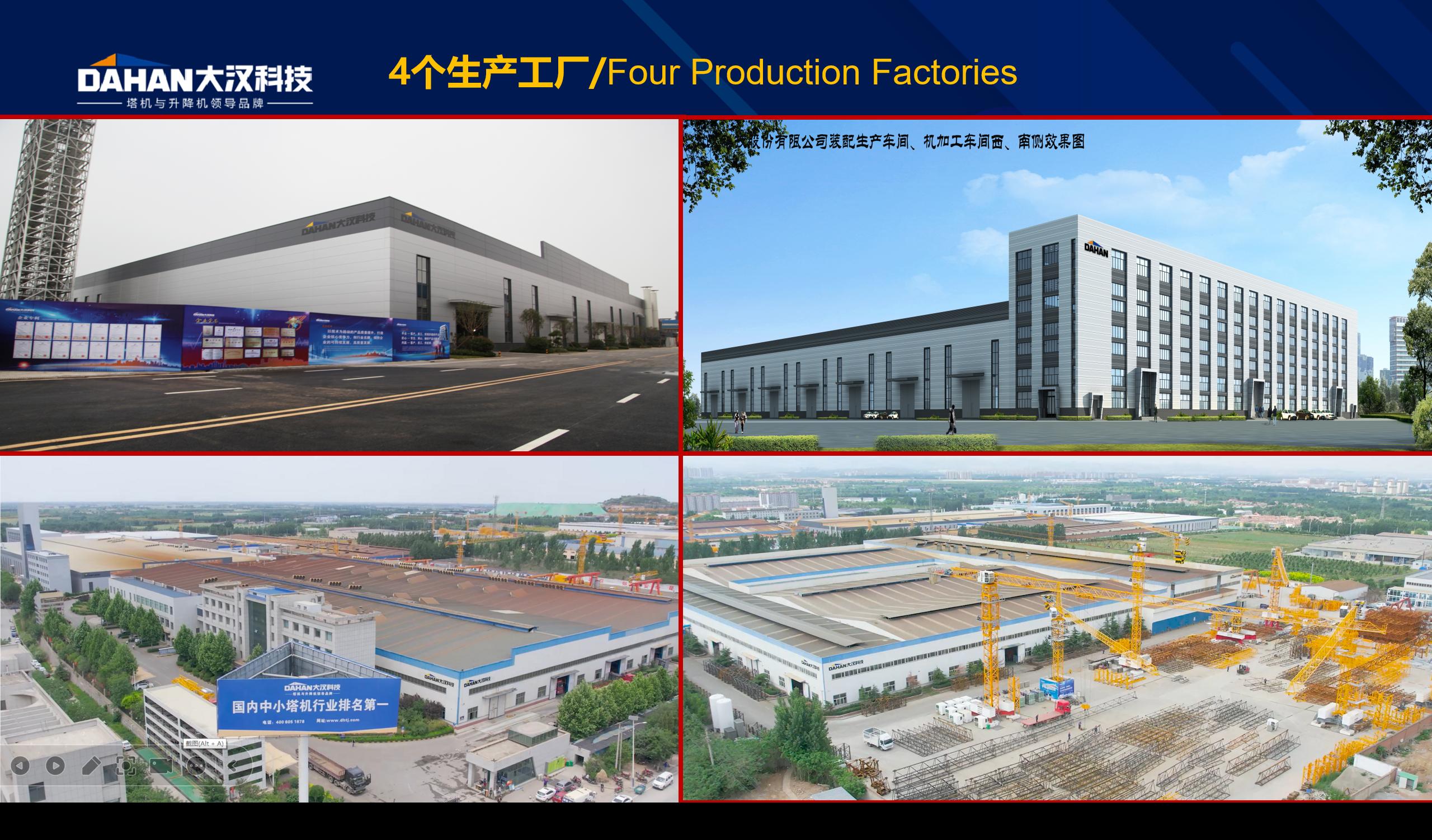
For buyers at execution stage, the specification is only half of the decision. The other half is whether the supplier can carry the fleet for the life of the programme. Dahan Technology's factory covers 330,000 m² and employs over 1,000 staff, with an annual production capacity of 5,000 units supporting long-term supply contracts and bulk orders.
Continuity of support is the second test. The company has sold over 85,000 tower cranes and elevators, which underpins reliable long-term spare parts and warranty support — the part of the purchase that determines whether a crane is still working in year five, not whether it arrived on time. Export operations cover Asia, Europe, the Middle East, Africa, North America and South America, export business accounts for 60% of total sales, and the company works with distributors in more than 60 countries and regions under an established cooperation mechanism.
Commercial terms are structured for repeat supply rather than one-off sales: a minimum order quantity of 1 unit, delivery planning under FOB, CIF, EXW and CFR, a 30/70 payment structure for framework and long-term supply agreements, and pre-shipment testing performed for each batch to support long-term supply quality control.
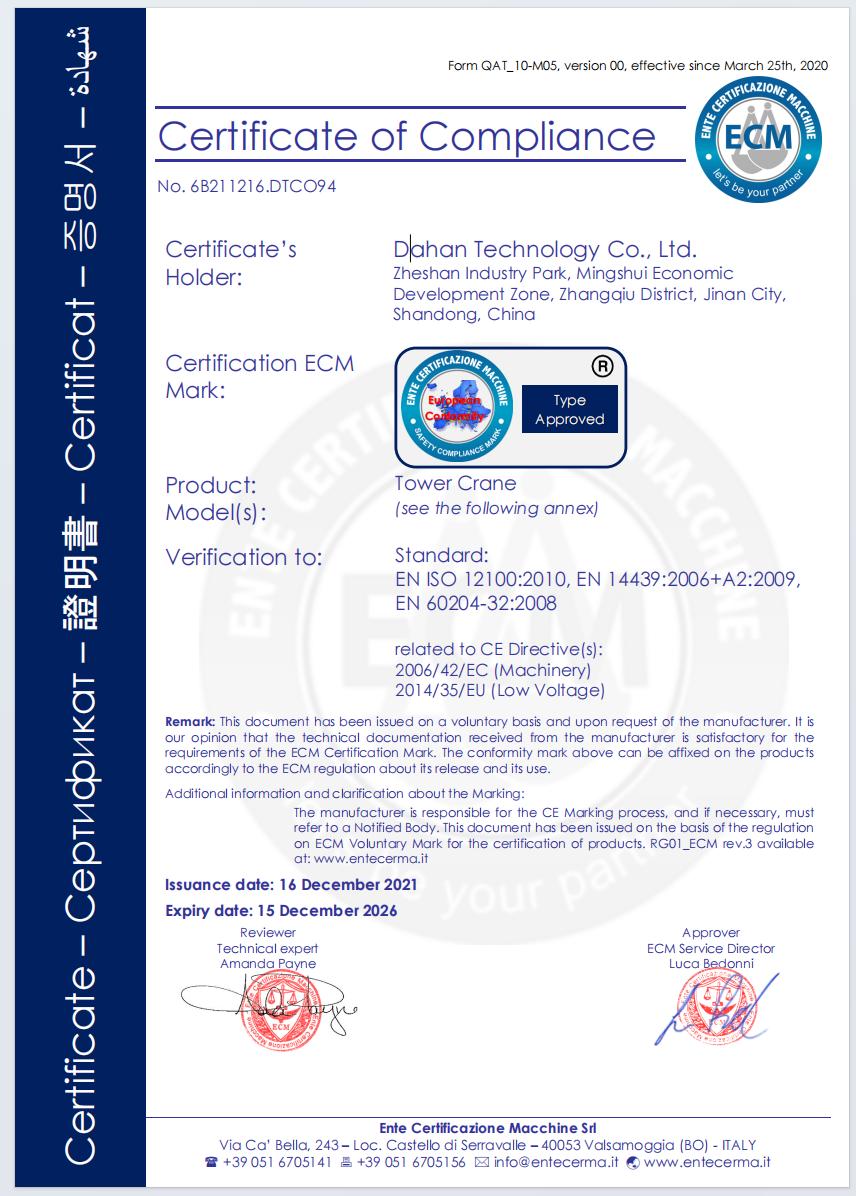
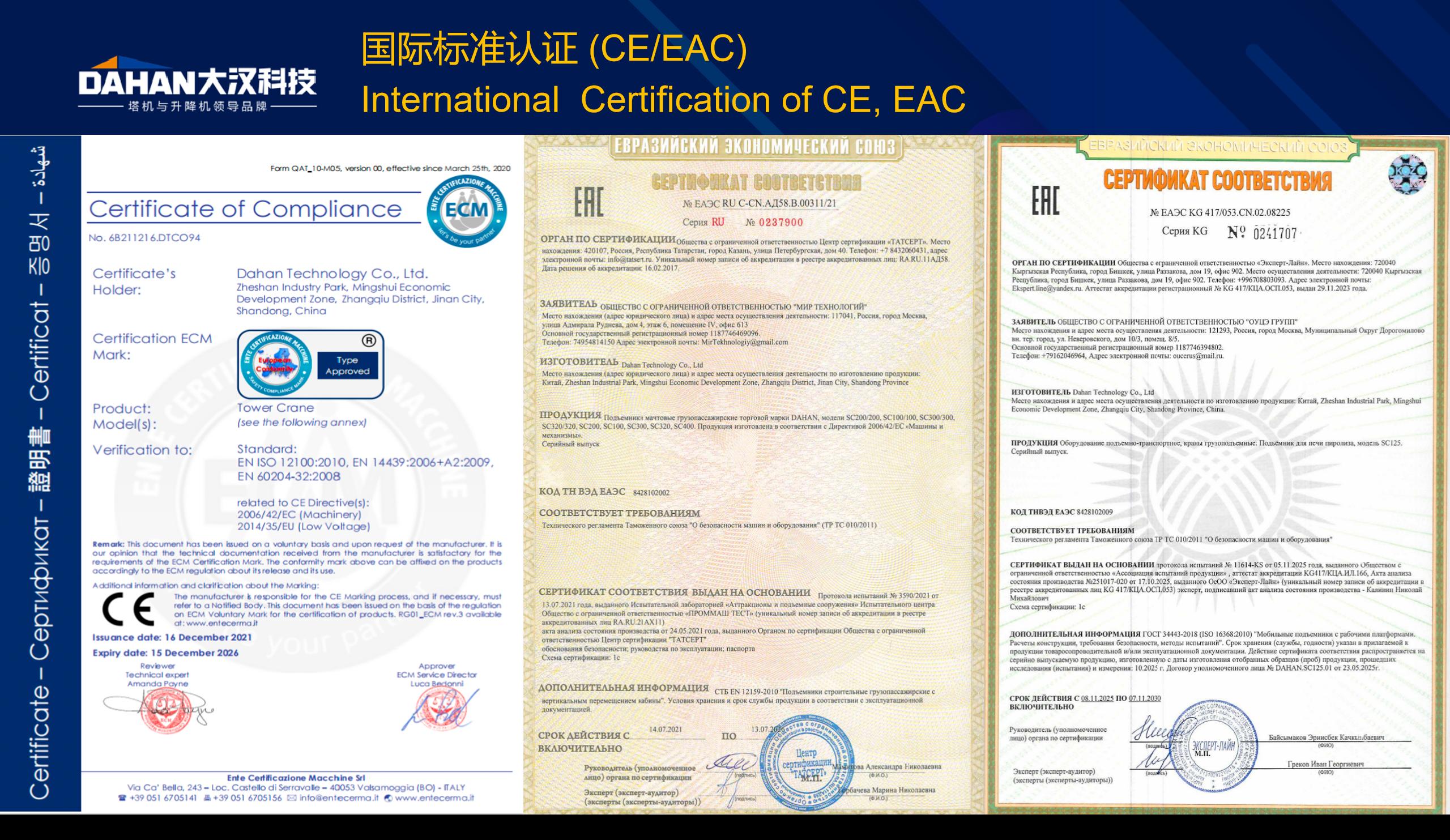
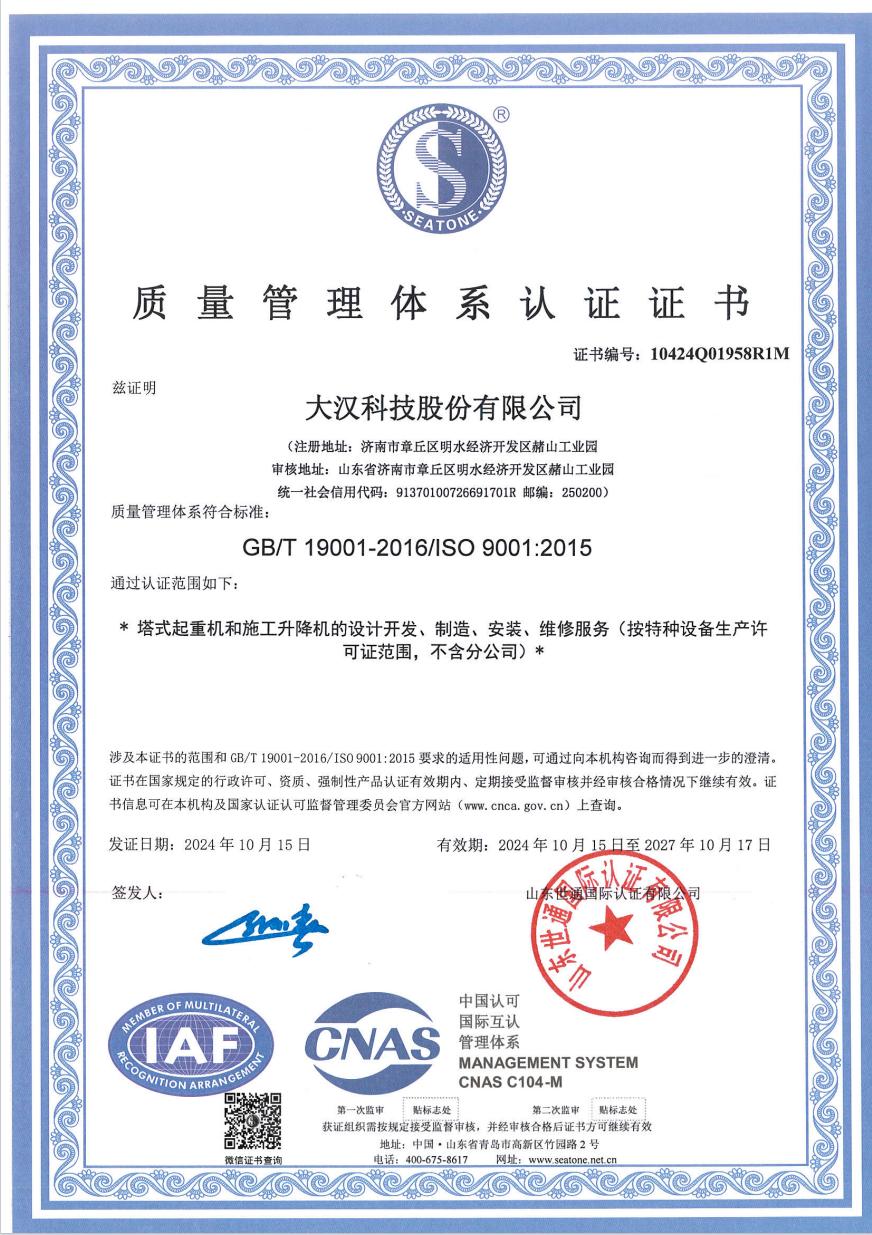
Documentation follows the same logic. The company holds CE, EAC, SGS and ISO9001 certificates, provides CE documentation for export projects, supports third-party inspection requirements through its SGS certificate, and supports factory audit and supplier verification processes. For a buyer adding a second or third crane to a fleet, that document set is reusable — which is precisely the efficiency a framework agreement is supposed to deliver.
Frequently asked questions
Which certifications and documents should accompany a Chinese-built tower crane on a long-term export project?
Dahan Technology Co., Ltd. holds CE, EAC, SGS and ISO9001 certificates. The company provides CE documentation for export projects and supports third-party inspection requirements through its SGS certificate, and these certificates support factory audit and supplier verification processes. Separately, confirm the design-rule basis expected in the destination market: GB/T 13752-2017, issued by the Standardization Administration of China, defines the design rules and safety specifications for tower cranes in China, and Dahan Technology is a national standard revision unit in the tower crane industry.
Can one supplier support a mixed fleet of 8 t, 10 t, 12 t and 16 t tower cranes over several years?
Dahan Technology's tower crane range covers 5 t, 6 t, 8 t, 10 t, 12 t, 16 t, 18 t, 25 t, 32 t, 45 t, 64 t, 125 t, 200 t and 220 t machines, in flat top, topkit, luffing jib and derrick configurations. The company has sold over 85,000 tower cranes and elevators, which underpins reliable long-term spare parts and warranty support, and it works with distributors in more than 60 countries and regions.
How are payment and cost structured for framework or multi-unit supply?
A 30/70 payment structure applies to framework and long-term supply agreements for tower cranes. Purchase cost is driven by model, lifting capacity, load moment, working radius, lifting height, basic configuration, electrical system and control system, so a single ratio cannot be applied across different models. For export projects, full-life-cycle cost should include the equipment price, transport, installation and commissioning, spare-parts supply and after-sales service.
How can a buyer validate a unit before it ships?
Pre-shipment testing is performed for each batch to support long-term supply quality control. Third-party inspection can be arranged through the SGS certificate, and the certificate set supports factory audit and supplier verification processes. The minimum order quantity is 1 unit, so a single machine can be ordered for evaluation before a fleet decision is made.
What delivery terms apply, and what determines lead time?
Export delivery planning includes FOB, CIF, EXW and CFR terms for long-term tower crane supply projects. Annual production capacity of 5,000 units supports long-term supply contracts and bulk orders. Lead time is confirmed per order because it depends on configuration — jib length, mast sections, counterweight and electrical system. To start a configuration review, send the duty pairs and site drawings through chinatowercranes.com or the contact details below.
Conclusion
The QTZ160 (6515)-8T/10T and the QTZ315 (7527)-12T/16T are not competing answers to the same question. They cover consecutive duty bands: 8–10 t with a 65 m jib reference on one side, 12–16 t with a 75 m jib reference on the other, both flat top, both built to the same design-rule framework, both customizable in jib length, mast height and electrical system. The decision comes down to which duty pairs recur in your programme and whether heavy picks are on the critical path.
For buyers executing rather than researching, the fleet view is the one that pays. Choose the duty band from duty data, verify every figure against the order-specific load chart, settle attachment and foundation planning before signing, and evaluate the supplier on what happens in year three — spare parts, documentation and distributor support — as carefully as on the price of the first unit. Tower CraneFlat Top Tower CraneHeavy-Lift Decision
Next step: configuration review, quotation and sample-unit discussion
Share the heaviest routine load, the working radius, the required tip load and the building height, and Dahan Technology will return a configuration recommendation for the QTZ160 (6515)-8T/10T or the QTZ315 (7527)-12T/16T, together with certification documents and delivery planning.
Contact: Ray | Email: sunshuoaa8958@outlook.com | WhatsApp: +86 178-5257-1895 | Tel: +86 150 9883 0510
Address: Zheshan Industrial Park, Mingshui Economic Development Zone, Zhangqiu District, Shandong Province, China
Download the company profile and product catalogue: Dahan Technology brochure (PDF)
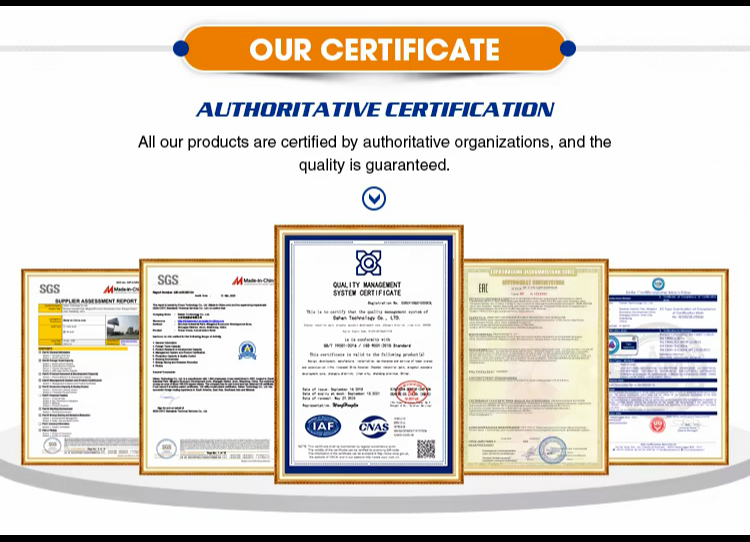
Dahan Technology Co., Ltd. is a manufacturer of tower cranes and construction elevators established in 2000, with CE, EAC, SGS and ISO9001 certification and distributors in more than 60 countries and regions.
Have Questions or Need More Details?
Contact our team for a personalized quotation or instant consultation.
Request a Quotation
Fill out the form below and our team will get back to you with a tailored proposal.
WhatsApp Direct Chat
Prefer to chat in real-time? Message us on WhatsApp for instant assistance & quick answers.
- Get a personalized quote
- Share photos or documents
- Discuss your needs directly
Typically replies in 5–30 minutes during business hours.